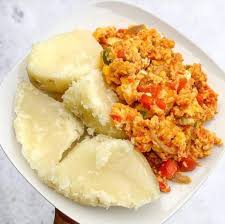
Yes, you can eat yam with diabetes. Nobody is asking you to give it up.
But there is one thing about yam that almost nobody is told, and it turns the usual advice on its head. The way most people believe is the safe way to cook it, just boiling it in water, is the way that raises your sugar fastest.
Boiled yam is quicker on your sugar than pounded yam, and quicker even than eba. The good news sits right beside that hard fact. One small thing on the side, an egg, does more for a yam meal than almost anything we have ever seen.
Does yam raise blood sugar?
Yes, and how fast depends almost entirely on what you did to it in the kitchen. The same yam, cooked two different ways, becomes two different foods for your sugar.
Diabetes UK, in their own guide to how foods are scored, say that the way a food is cooked and processed changes how fast it turns into sugar. Yam is one of the clearest examples of that in the whole Nigerian kitchen.
Foods are given a score from 0 to 100 for how quickly they reach your blood as sugar. Anything from 1 to 55 is slow, and that is where you want to be. From 70 upwards is fast, and that is the end to be careful with.
Here is where the common forms of yam fall, from the fastest to the gentlest.
• Boiled yam is 94. It is one of the fastest starches on your table.
• Pounded yam is 81.
• Amala made from yam flour is 69.3, the gentlest form.
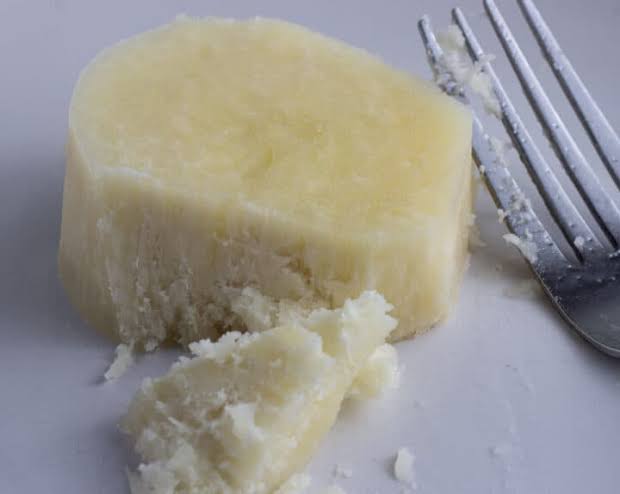
Look at the top of that list again, because it catches almost everybody. Boiled yam, with no oil and nothing added, comes out faster than pounded yam that has been through a mortar.
It is not a failing on your part if that surprises you. Boiling looks like the careful choice, so nobody ever thinks to question it.
But your blood does not care how little you put in the pot. It responds to how soft and how broken down the food is, and a pot of well boiled yam is very easy for your body to turn into sugar.
The one thing that changes a yam meal: an egg beside it.
This is where yam stops being a worry and starts being one of the easier foods to handle, and it is the part worth carrying with you.
Boiled yam on its own is 94. Eaten with a fried egg beside it, that same yam comes down to 84. Ten points, from one egg.
That is a big move, and it is worth understanding how rare it is. Boiled plantain, given the same treatment with a stew, barely shifts at all, by a single point. Yam is different. Of all the foods on the Nigerian table, yam is one of the most willing to change based on what you put next to it.
So the food that looked like the villain a moment ago is the one that answers best to a small fix.
The egg is body-building food, and body-building food slows your stomach down, so the sugar from the yam trickles into your blood instead of rushing in all at once. Fish and chicken do the same work.
So does a good helping of vegetables, because vegetables carry the rough part of the food that your body cannot rush through.
None of this means you can eat any amount of yam as long as an egg is nearby. The size still decides more than anything.
But it does mean a bare heap of boiled yam eaten alone is the worst way you could have it, and the fix is something already in most kitchens. Put an egg, some fish or some chicken beside it, add vegetables, and you have taken a fast food and slowed it right down.
Can a diabetic eat pounded yam?
Yes, and it treats you a little better than boiled yam, though not by as much as people hope. Pounded yam is 81, against boiled yam's 94. It is also a touch gentler than eba, which is 84.
If pounded yam is the one your family gathers around, we went through eba, its number and how much of it is safe on its own, and the same thinking applies here.
But 81 is still well inside the fast end, so pounded yam is not a food to relax with. Keep it to one ball the size of your closed fist, put a proper vegetable soup and some fish, chicken or an egg beside it, and keep it to about two times in a week.
The mistake is not eating pounded yam. The mistake is the second ball, which lands on top of a rise that has not finished from the first one.
Can a diabetic eat water yam, yam porridge or fried yam?
Water yam behaves like the rest of the family. Whether you boil it or turn it into ikokore, keep the serving to the size of your fist and put vegetables and fish, chicken or an egg beside it.
Yam porridge, the asaro, can be a good meal when it is loaded with vegetables and fish cooked right inside it, because they slow the whole thing down. One bowl is the size to keep to.
The thing to watch is the oil. A porridge swimming in palm oil is heavy on your heart even on a day your sugar behaves.
Fried yam, the dundun, is the one to keep for special days. The oil delays the sugar a little, so its speed can look kinder than it is, but the sugar is still coming and the oil brings a separate bill for your heart and your cholesterol. Have it now and then, not as an everyday food, and never as a big heap on its own.
Is yam flour good for diabetes?
This is the gentlest way yam comes, and most people never separate it from the rest. Amala made from yam flour is 69.3, which sits just below the fast line rather than deep inside it.
The reason is the same reason plantain flour behaves so differently from boiled plantain. Drying the yam and grinding it into flour changes the starch inside it, so your body handles it more slowly than the boiled tuber it came from. Same yam, different food, and a kinder answer.
That does not make amala a free food either. It is still a swallow, and the size of the ball still matters. But if you love yam and you are choosing how to cook it, the flour is the form that treats your sugar best.
Is yam the same as sweet potato?
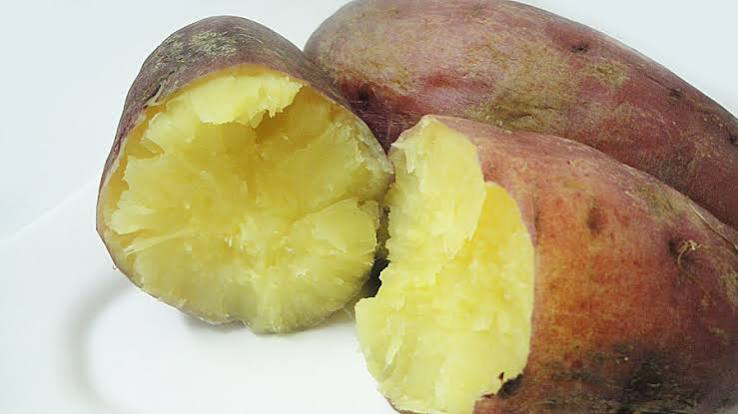
They are not the same, and this matters more than it sounds, because it is the reason so much advice online is confusing.
When you read on a foreign health site that "yam" is a slow food that is fine for diabetes, there is a good chance they are not talking about the yam in your pot at all. Abroad, the orange sweet potato is often sold and written about as "yam".
Our white yam and the sweet potato are two different foods, and they reach your blood at different speeds. So an article that praises "yam" may be praising a food you are not even eating. Read whose yam they mean before you trust the answer.
How much yam can a diabetic eat?
A serving about the size of your closed fist, which is two small pieces of boiled yam, each the size of a matchbox (100g), about two times in a week.
Pounded yam is one ball that size, also about two times a week.
Amala from yam flour is a little more forgiving, so you can have it about three times a week, because it is the gentle one, and it holds up well against the other everyday swallows.
That is the honest size, and it is smaller than most people serve. The rest of your food is where the room is: fill it with vegetables and with fish, chicken or an egg, and the yam sits comfortably inside a full meal instead of standing alone.
Every food you cook has a size like this and a count like this, and no one can hold hundreds of them in their head. The harder part is what happens when you put foods together, because the answer moves.
Yam with an egg and vegetables is one thing. That same yam beside white rice with a soft drink is a different thing entirely.
Is yam good for diabetes and high blood pressure, cholesterol or your kidneys?
Plenty of people are not managing diabetes alone, and almost nobody answers this part for them.
Yam on its own is kind to the rest of your body. It carries no salt and no fat, so boiled or pounded, it gives your heart, your pressure and your kidneys nothing to complain about.
The trouble comes with what we add. Fried yam is heavy with oil, and heavy oil is hard on your cholesterol and your heart even when your sugar is fine. A salty, peppered stew or a palm-oil porridge lifts your blood pressure and gives your kidneys extra work.
So a food that is safe for your sugar is not automatically safe for the rest of you, and if you are managing more than one condition, speak to your doctor or your dietitian about your own case.
Your yam is one question. Your dinner is another
Yam is a single food, and you have seen how the answer already changes from boiled to pounded to flour, and again once an egg lands beside it. Now think about everything else you cook, and how the answer shifts once the whole meal comes together.
That is the gap GluFloat was built to close. You type in the food and it tells you where you stand, the size to keep to, and what to eat it with.
Then you build your whole meal and watch the answer move as you change it. You can try it free, and it does not ask for a card, so you can test it on tonight's dinner before you decide anything.
One honest note before you go
Nobody is asking you to give up yam. A fist-size serving, an egg or some fish beside it, and about two times a week. That is a small change, and it can start at your very next meal.
Check your food before you eat it.
Search from 1,500+ Nigerian foods and meals to instantly see whether it's green, yellow, or red for your diabetes and discover simple changes that can turn it into a better choice.
Start my 7-day free trialFree for 7 days. No card required.
Read next
- What Is the Best Swallow for a Diabetic in Nigeria?Which swallow is best for diabetes? We ranked 14 Nigerian swallows by measured numbers. Wheat and fufu are the worst. The winner will surprise you.12 min read
- Is Plantain Good for Diabetes? Unripe vs RipeIs unripe plantain good for diabetes? It was measured at 89, not low at all. Here is what ripe, boiled, roasted and fried plantain do to your sugar.13 min read
- Is Eba Good for Diabetes? What the Numbers Say, and How Much Is SafeIs eba good for diabetes? Eba scores 84 on the sugar scale. Here is how much is safe, what to eat it with, and how it beats fufu but not amala.10 min read