Two published measurements for banana disagree so badly that they cannot both be right.
One puts it near the very top of the scale. The other puts it a little above halfway.
So here is the answer before the explanation.
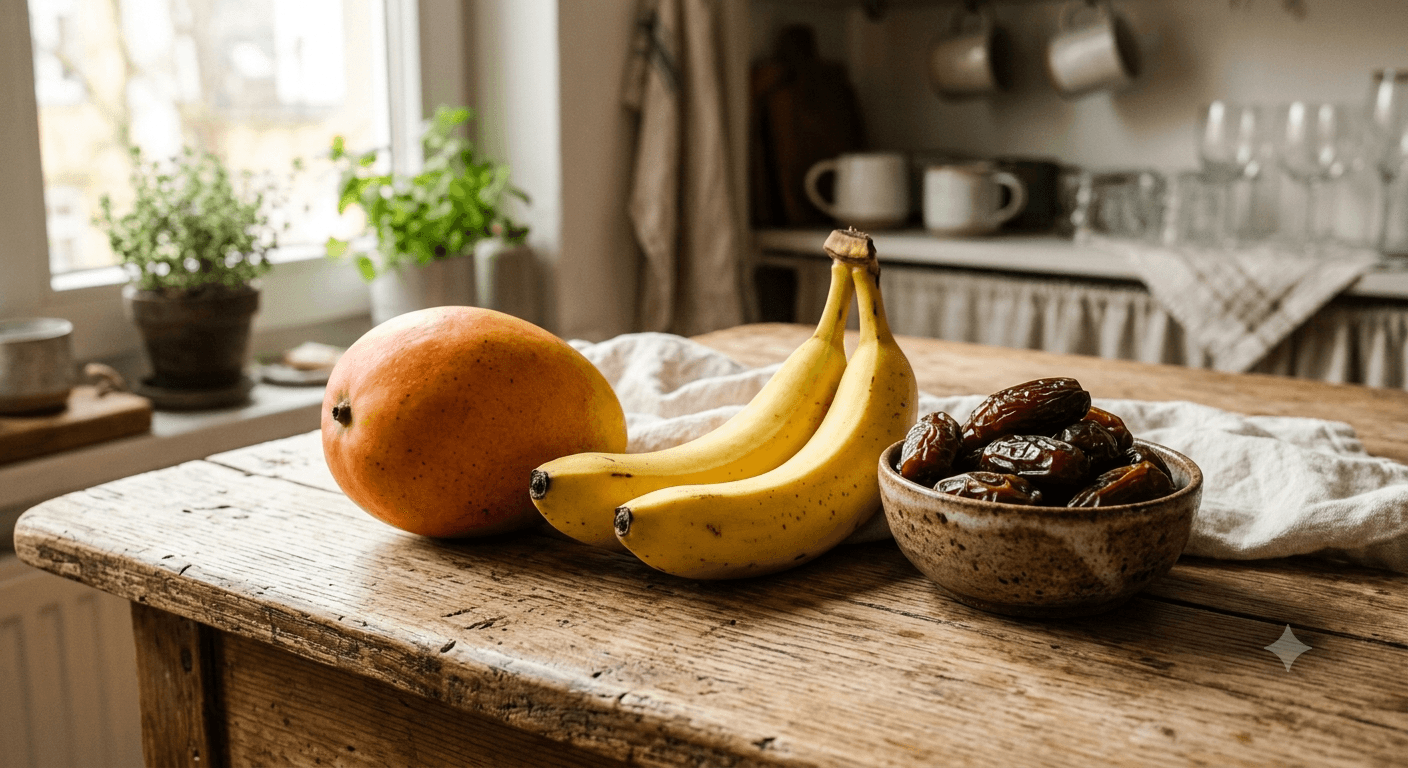
Yes. You can eat mango, dates and banana.
What separates them is not whether the fruit is good or bad. It is how much of it you eat, and how often.
For many people with diabetes, a practical starting point is half a small mango or half a medium banana, eaten about 3 times a week as part of a balanced diet.
Dates are the different one, and that is the part worth reading slowly.
Why the number you find for banana keeps changing
A Nigerian measurement puts banana at 99.3, which would make it faster than white bread.
International tables put the same fruit near 51.
Both were published.
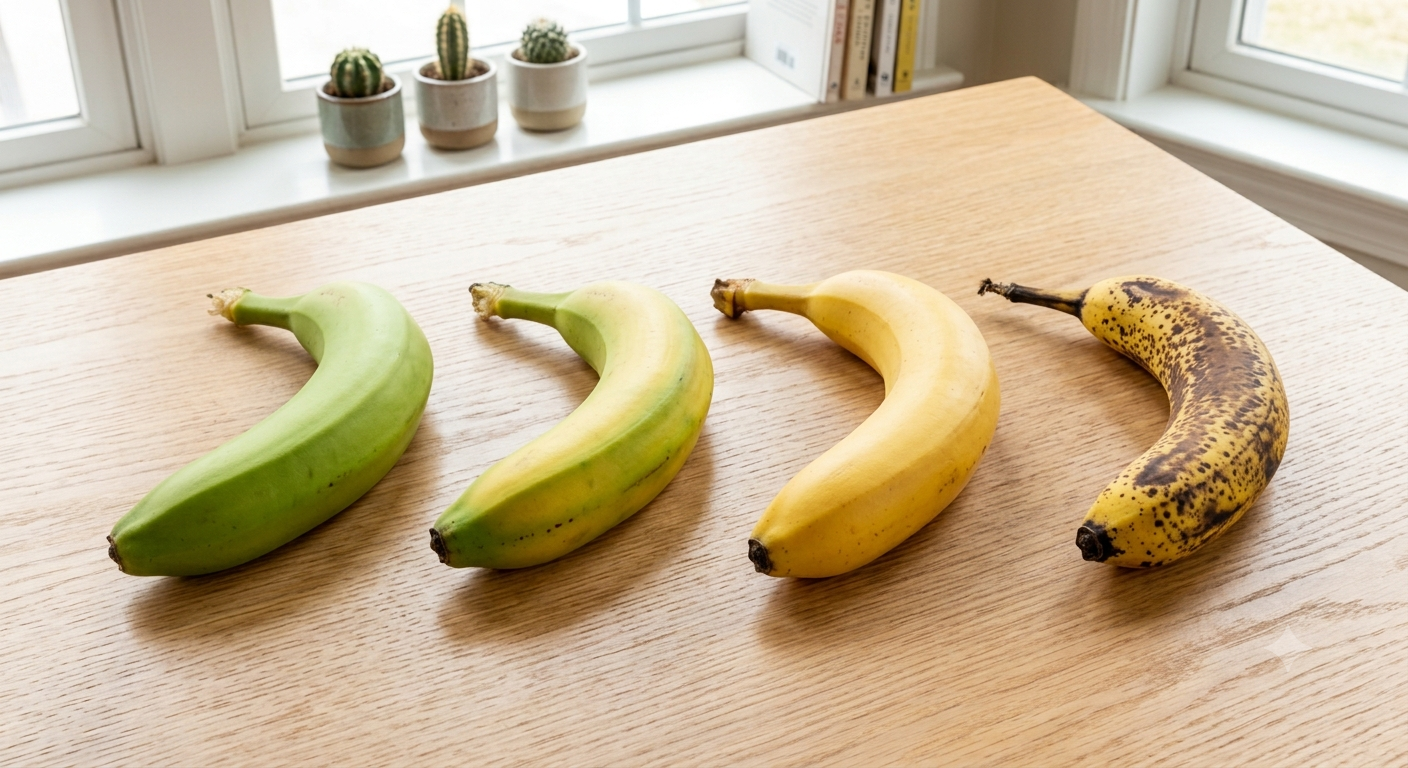
Different studies have reported very different values because they tested different banana varieties, levels of ripeness, and groups of people.
That gap is wider than the distance between rice and vegetables, and it tells you something useful.
Ripeness changes the number. Variety changes it. The number of people tested changes it. Even the meal it follows changes it.
So chasing the perfect figure for a fruit is not a contest you can win, and you do not need to win it.
Nobody eats a glycemic index. People eat an amount.
The amount is the whole answer
Dietitians work with something much simpler than an index.
They ask how much of a fruit gives you about 15 grams of carbohydrate, and they call that one serving.
For mango, that is half of one small mango. About 80 grams, or roughly half a cup of cut pieces.
For banana, it is half of one medium banana.
Not half a bunch. Half of one.
At that size, both fit comfortably into a balanced eating plan for many people with diabetes.
Checking your blood glucose after eating can also help you understand how your own body responds, since everyone's response is slightly different.
And if you are still hungry after half a banana, reach for groundnut or a boiled egg rather than the other half. The hunger goes and your blood glucose stays steadier.
Dates are the one to watch
This is where most advice gets it backwards.
Dabino is sold everywhere as the natural sugar. The healthy sweet. The one you are finally allowed.
On the index, dates do look calm. Five varieties measured between 46 and 55 in people living with type 2 diabetes, which sits in the low band.
So why keep them to one date?
Because of how that measurement is made.
The index is always tested on a fixed amount of carbohydrate, and dates are so concentrated that reaching it takes about seven of them at once.
A calm score earned by eating seven dates is not permission to eat seven dates.
Dates are dried fruit. The sugar that was once spread through a whole fresh fruit is packed into something you can swallow in four seconds.
That is the difference between how fast a food raises blood glucose and how much sugar it delivers. Dates are gentle on the first and heavy on the second.
One date at a time is a sensible amount for many people with diabetes. How often depends on your overall diet, blood glucose control, and your healthcare team's advice.
That is not a punishment. It is simply a portion that reflects how concentrated dates are.
What about mango juice and smoothies
Juicing takes out the rough part of the fruit, the part that slows everything down.
What is left is sugar and water, and it reaches your blood far faster than the fruit it came from.
Fruit juice can raise blood glucose much faster than whole fruit because it removes most of the fibre. It is generally better to choose whole fruit instead.

A smoothie made from three fruits is three servings, drunk in two minutes.
Whole fruit, chewed, is the version your body handles best.
If you are also managing blood pressure or your kidneys
Almost nobody answers this one.
Mango and banana are both easy on blood pressure. Neither carries salt and neither is fried, so the usual worry does not apply.
Banana is high in potassium. For most people that is good news.
If your kidneys are not working well, potassium is a real question, and it is one for your own doctor rather than for a general article. The NHS sets out how food and activity fit together in type 2 diabetes, and your clinic can tell you where you personally stand.
Bring the actual fruit you eat to that conversation. It is a far more useful appointment than asking whether fruit is allowed.
Cholesterol is a common worry too, and none of these three carry the fat that raises it. What sits beside them usually does. A mango after a plate of fried food is not a mango problem.
The fruits this article did not name
Mango, dates and banana are three fruits out of dozens on a Nigerian table.
Udara comes into season every year and nobody tells you the size. Agbalumo, soursop, pawpaw, watermelon, tiger nuts, cashew fruit, garden egg. Each one has its own amount and its own number of times that may fit into a healthy eating pattern.
Then there is the harder question, which is what happens when the fruit is not eaten alone. Banana after rice behaves differently from banana on its own. So does mango at the end of a heavy Sunday meal.
No article can carry all of that, and the honest thing is to say so plainly rather than leave you guessing at the end of it.
The right size is different for every one of them.
That is the work GluFloat does. You type in the fruit, or the whole meal you are about to eat, and it gives you the size, what to put beside it, and how often it fits in your week. Try it on whatever fruit is in your house right now. It is free to start and it does not ask for a card.
Final thoughts
The question was never whether mango, dates or banana are good for you.
Fruit was never the enemy. Vague advice was.
Ask how much and how often, and the answer stops moving.
Half a mango. Half a banana. One date.
Check your food before you eat it.
Search from 1,500+ Nigerian foods and meals to instantly see whether it's green, yellow, or red for your diabetes and discover simple changes that can turn it into a better choice.
Start my 7-day free trialFree for 7 days. No card required.
Read next
- Is Ofada Rice Good for Diabetes?Is ofada rice good for diabetes? Yes, and it beats white rice. But the number everybody quotes for it was never tested on a Nigerian.5 min read
- Is Fufu Good for Diabetes? Cassava, Wheat and Plantain FufuIs fufu good for diabetes? Fufu scored 97, the highest swallow measured in Nigeria. See the safe size, the best soup, and how wheat and plantain fufu compare.8 min read
- Is Garri Good for Diabetes? Eba, Soaked Garri, Ijebu and Yellow GarriIs garri good for diabetes? See how eba and soaked garri differ, whether ijebu or yellow garri is safer, and the best way to take garri with diabetes.6 min read