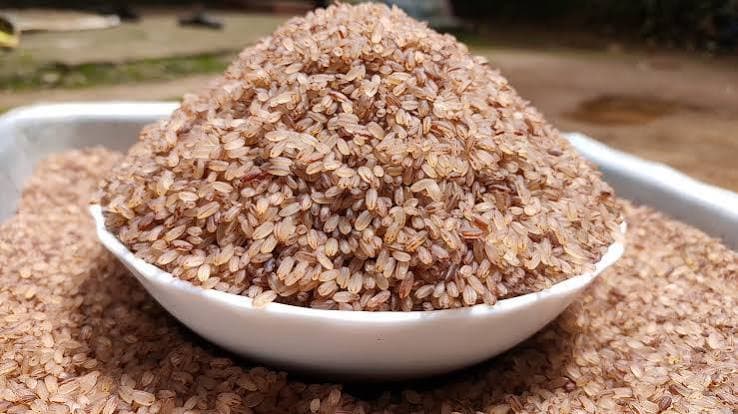
Yes. Ofada is one of the better rices you can put in your bowl, and three-quarters of a cup of it, about 120 grams cooked, fits about three times a week.
That is the answer.
What nobody tells you is where the figure behind that answer comes from, and it is worth two minutes, because it decides how much you should lean on it.
What makes ofada different from white rice?
A grain of rice has three parts. The starchy middle, the outer coat, and the small germ at its base. Diabetes UK sets out what a whole grain is and what is left once the coat comes off
Polishing strips the coat and the germ and leaves the starchy middle behind.
That coat is the rough part of the food. It is what makes your body work harder and take longer.
Ofada keeps most of it. White rice keeps none of it.
That is the whole of the difference, and it is why the short speckled local one with the strong smell is the better buy.
What is the glycemic index of ofada rice?
Foods are given a score from 0 to 100 for how fast they turn into sugar inside you. Under 55 is the slow end. Over 70 is the fast end.
Ofada is quoted at around 50 almost everywhere you look.
Nobody has yet put that figure to the test in Nigeria, in Nigerians, eating ofada.
It travels here from unpolished rice in general, which covers a wide family of grains cooked in very different ways.
So hold the safer position. Ofada is slower than white rice without being a slow food.
Somewhere in the middle. Better than what most homes are cooking, and still a starch.
Is ofada rice the same as brown rice?
No, although they behave alike.
Brown rice is any rice with its coat still on.
Ofada is a Nigerian variety, short and speckled, grown mostly in the south west and usually sold unpolished.
For your sugar they land in the same place. Three-quarters of a cup cooked, about 120 grams, roughly three times a week.
If brown rice is what your shop stocks, it does the same work.
Which rice is best for a diabetic in Nigeria?
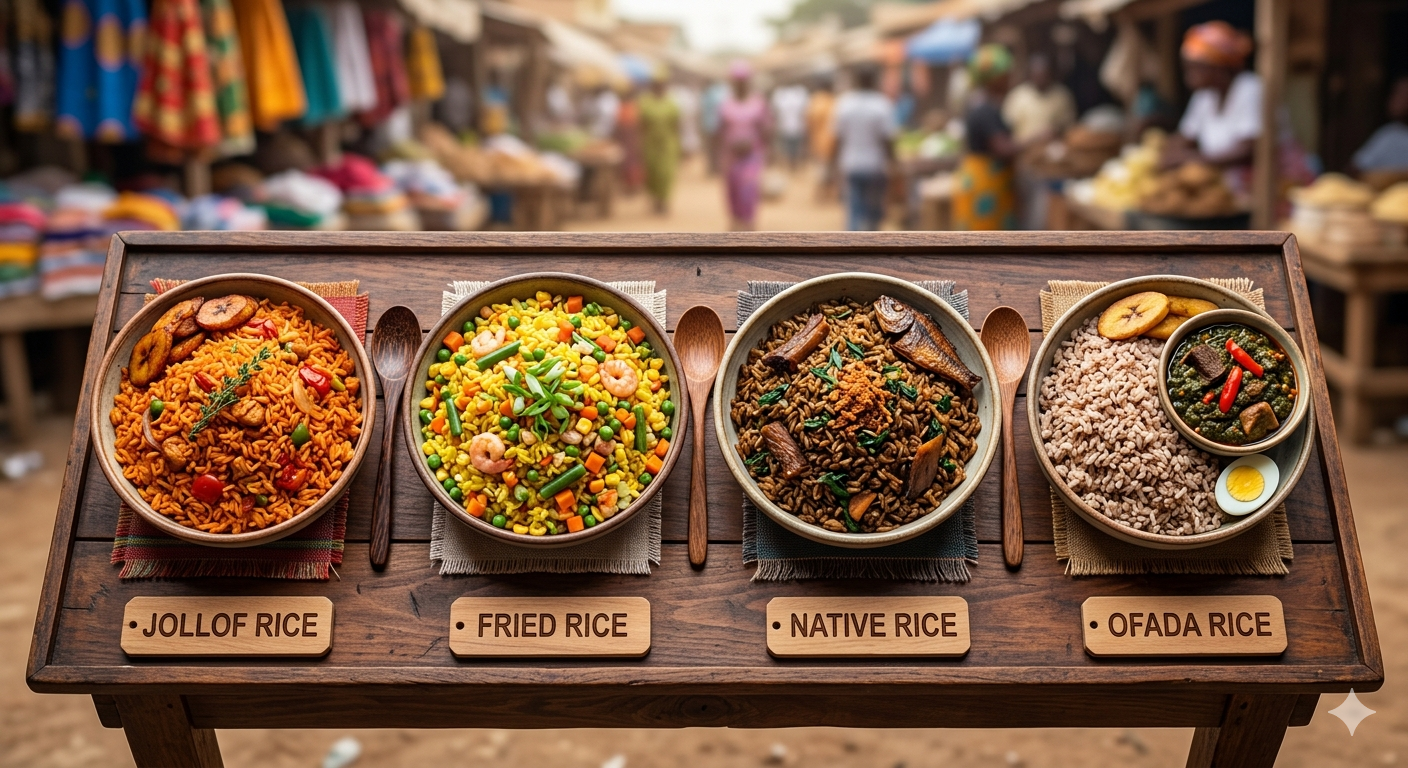
From the one that treats you best down to the one that treats you worst:
• Parboiled rice, three-quarters of a cup, about three times a week. It comes in between 50 and 60.
• Ofada, the same size and the same three times.
• Brown rice, the same again.
• White boiled rice, half a cup, about the size of a tennis ball, roughly 90 grams, two times a week.
• Fried rice and native rice, the same half cup and the same two times, with a lot of oil on top.
• Jollof, half a cup, two times a week, and the fastest of the lot at 98.9.
Is local rice good for diabetics?
Careful here, because local rice means two different things to two different people.
To one person it is ofada. To another it is the ordinary parboiled rice sold in every market in the country.
The parboiled one is the surprise, because it looks like white rice and behaves nothing like it.
Parboiling steams the grain before it is milled, and that pushes some of the goodness of the coat into the middle before the coat is taken off.
So the rice most Nigerian homes already cook is one of the better ones. You do not have to go searching for a special bag.
How much ofada rice should you eat at once?
Three-quarters of a cup, cooked. About 120 grams.
Not the mound you were served at the last owambe.
Fill one cup (250ml) three-quarters of the way, once, at home. After three meals your eye learns the size and you stop needing to check it.
And do not eat it on its own. Rice alone behaves worse than rice inside a full meal, and the difference is large. White boiled rice reaches 93 by itself and comes down into the middle seventies once soup, vegetables and fish, chicken or an egg join it.
One big spoon of ayamase (125ml), with fish or chicken beside it, is the meal ofada was made for.
Is ofada rice good if you have high blood pressure or high cholesterol?

The rice is, and this is where the warning belongs, because the trouble is not the rice.
Ofada is nearly always served with ayamase, and ayamase is cooked with plenty of palm oil and finished with assorted meat. Shaki, pomo and offal are fine for your sugar and hard on your blood pressure and your cholesterol.
So keep the good rice and change what sits on it. Use less oil in the sauce, take fish or skinless chicken instead of the assorted meat, and go easy on the seasoning cube and the salt.
Your heart and your kidneys are being managed alongside your sugar, and almost nobody joins those two conversations up for you.
What about the rest of what you eat this week
Rice is one food. Your week holds twenty more, and each one has a size and a count of its own that nobody handed you at the clinic.
The answer moves again the moment two foods meet, the way plantain beside rice is a different question from either one alone.
That is the work GluFloat does for you. You type in the food, or the whole meal you are about to eat, and it gives you the size, what to put beside it, and how often it fits in your week.
Try it on whatever is cooking in your kitchen tonight. It is free to start and it does not ask for a card.
You were never wrong to love rice. You were only ever given the wrong size.
Check your food before you eat it.
Search from 1,500+ Nigerian foods and meals to instantly see whether it's green, yellow, or red for your diabetes and discover simple changes that can turn it into a better choice.
Start my 7-day free trialFree for 7 days. No card required.
Read next
- Is Fufu Good for Diabetes? Cassava, Wheat and Plantain FufuIs fufu good for diabetes? Fufu scored 97, the highest swallow measured in Nigeria. See the safe size, the best soup, and how wheat and plantain fufu compare.8 min read
- Is Garri Good for Diabetes? Eba, Soaked Garri, Ijebu and Yellow GarriIs garri good for diabetes? See how eba and soaked garri differ, whether ijebu or yellow garri is safer, and the best way to take garri with diabetes.6 min read
- Can a Diabetic Eat Mango, Dates or Banana?Can a diabetic eat mango, dates or banana? Yes, all three. What separates them is the amount, and dates are the one almost everybody gets wrong.5 min read