You have lived with diabetes for some years. Then one day the doctor reads your urine test or your blood result and says your kidneys are not working as well as they should. Suddenly you are scared of every plate.
If that is you, you may be wondering: what food is good for diabetes and kidney disease?
The short answer is fish or chicken with no skin, eggs, garden egg, cucumber, apple, and vegetable soups cooked with very little salt, eaten with one small ball of swallow or half a cup of rice. What you must cut down depends on how weak your kidneys are, and that is something only your blood tests can tell. This post explains why, food by food.
Why Do Diabetes and Kidney Disease Come Together?
High sugar, year after year, slowly damages the tiny filters inside your kidneys. High blood pressure does the same, and many people have both.
It is common. When researchers put together studies from across Africa, about 1 in every 5 people with type 2 diabetes already had kidney damage. People who also had high blood pressure were more than three times as likely to have it.
Kidney damage makes no noise at the start. You can feel completely well while it gets worse. That is why your doctor asks for urine and blood tests even when nothing hurts.
Is the Food for Diabetes Different From the Food for Kidney Disease?
Partly, yes.
For your sugar, the question is how fast a food turns into sugar in your blood. Swallows, white rice, white bread and sweet drinks do this fast.
For your kidneys, there are three more things to watch:
- Salt. Too much salt raises your blood pressure, and high blood pressure hurts weak kidneys more.
- Body-building food. Meat, fish, eggs and beans are good for you, but very big amounts give tired kidneys extra work.
- Potassium. This is a mineral found in yam, plantain, cocoyam, beans, many vegetables and many fruits. Healthy kidneys clear it easily. Very weak kidneys cannot, and too much of it in the blood can upset the heartbeat.
The first rule is for everyone with kidney disease. The second and third depend on your stage, and that is where most people go wrong.
Should Every Kidney Patient Cut Down on Potassium?
No. This surprises many people.
In early kidney disease, most people do not need to cut potassium at all. Cutting out fruits and vegetables for no reason only takes good food off your plate.
You only need to cut potassium when your blood test shows your potassium is high, or your doctor tells you to. This is more common when the kidneys are very weak or you are on dialysis.
So before you change anything, ask your doctor one simple question at your next visit: "Is my potassium high?" The answer decides how the rest of this post applies to you.
Can a Kidney Patient Eat Yam, Plantain and Cocoyam?
Yes, if your potassium is normal. Keep to the sizes that are good for your sugar: two small pieces of boiled yam, each about 5cm long and 3cm thick (100g), or three slices of boiled unripe plantain, each about 2cm thick (100g).
Yam, plantain and cocoyam are among the foods highest in potassium on the Nigerian table. If your doctor says your potassium is high, there is a cooking trick that helps.

Peel it, cut it into small pieces, boil it in plenty of water, and throw that water away. In a study on potatoes, boiling small cubes took out about half of the potassium, and boiling shredded pieces took out about three quarters. Simply soaking them did almost nothing. The study was on potatoes, but kidney dietitians use the same method for yam, cocoyam and plantain.
Roasted plantain (boli), roasted yam and plantain porridge keep all their potassium, because nothing is poured away. If your potassium is high, choose boiled pieces over these.
Our post on whether plantain is good for diabetes explains how ripe and unripe plantain compare for your sugar.
Can a Kidney Patient Eat Rice, Bread and Swallow?
For your kidneys, white rice, white bread, eba and fufu are actually low in potassium. The problem with them is your sugar, not your kidneys.
So keep the same sizes as any person with diabetes: one ball of swallow the size of your fist (100g), or half a cup of cooked rice (90g). Our post on which Nigerian foods raise blood sugar the most shows how the common starches compare.
Can a Kidney Patient Eat Beans?
Beans are very good for your sugar. They are also high in potassium, and they carry a mineral called phosphorus, which very weak kidneys struggle to clear.
If your blood tests are normal, keep eating beans. Half a cup of cooked beans (130g) is a good amount.
If your doctor says your potassium or phosphorus is high, soak the beans, throw that water away, boil them in fresh water, and throw the cooking water away too. Then ask your doctor or dietitian how often beans and moi moi are right for you.
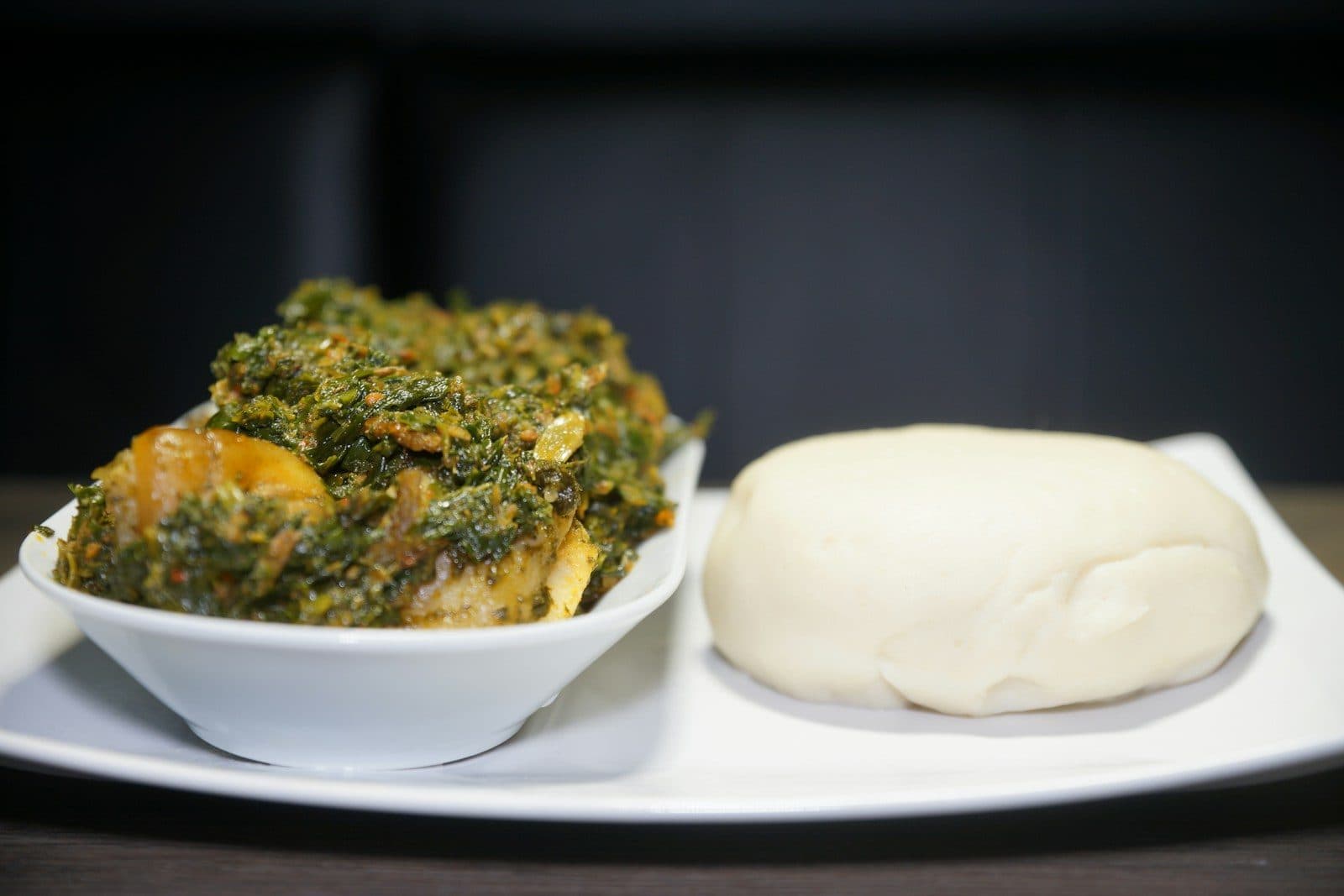
Can a Kidney Patient Eat Egusi, Okra and Other Soups?
Yes. Vegetable soups are some of the best food on the Nigerian table, and our post on okra for diabetes, high blood pressure and kidney problems goes deeper on okra.
The big danger in Nigerian soup is not the leaf. It is the salt, the seasoning cubes, the stockfish and the dried fish. Two big spoons of an ordinary pot of soup can already carry a good part of a whole day's safe salt.
To make your soup kinder to your kidneys:
- Use one seasoning cube for the whole pot, or none.
- Add salt at the end, and taste before you add more.
- Use fresh fish or chicken instead of stockfish and dried fish.
- Leave the oil on top of the soup behind when you dish it.
If your potassium is high, leafy soups like efo riro are high in it too. Wash and boil the cut leaves first, throw that water away, then cook them into the soup.
Keep all the salt in your food under one level teaspoon (5g) for the whole day. That is the limit the kidney guideline for people with diabetes sets too. Our post on food for diabetes and high blood pressure shows how to cook with less salt.
How Much Meat, Fish and Egg Can a Diabetic Kidney Patient Eat?
You still need body-building food. The answer is not to stop eating it, but to stop eating very big amounts.
The kidney guideline for people with diabetes suggests a normal amount, not a big one, for people who are not on dialysis. In plain words:
- One piece of fish as wide as your palm (100g), or
- One chicken lap with the skin taken off (90g), or
- Two boiled eggs
at a meal. Not two pieces of meat plus fish plus egg on the same plate.
Choose fish and chicken over beef, goat meat, pomo, shaki, liver and kidney. Red meat and organ meat are harder on your heart and your kidneys.
If you are on dialysis, this changes. Dialysis takes some body-building food out of your blood, so many people on dialysis need more, not less. Your kidney doctor will tell you how much.
Which Fruits Are Good for Diabetes and Kidney Patients?
If your potassium is normal, you can eat the same fruits as any person with diabetes, at the right size. Our post on mango, dates and banana gives the sizes.
If your potassium is high, these are lower in it:
- Apple, one small apple about 6.5cm across (120g)
- Watermelon, six pieces, each about 3cm on every side (150g)
- Garden egg, three garden eggs
- Cucumber, one whole cucumber
Banana, orange, pawpaw, avocado (pear), dried fruit and coconut water are higher. Ask your doctor before you eat them often.
Is Star Fruit Safe for Kidney Patients?
No. Do not eat star fruit, or drink its juice, if you have kidney disease.
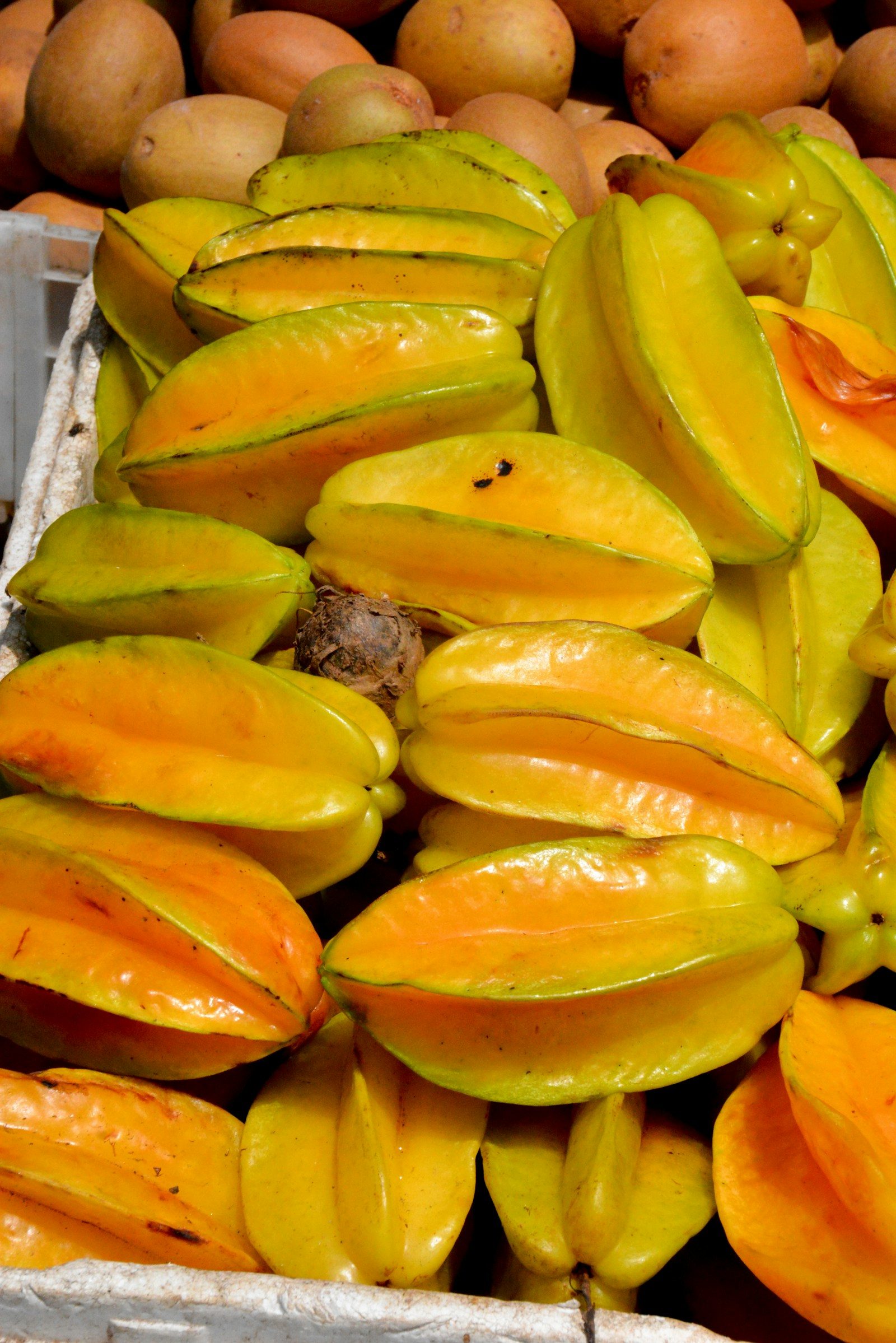
Star fruit carries a natural poison that healthy kidneys clear but weak kidneys cannot. In people with kidney disease, even one fruit has caused confusion, hiccups that will not stop, fits, and death. This is not about sugar or potassium. It is a poison, and the safe amount is none.
Is Bitter Leaf Water or Agbo Good for the Kidneys?
Bitter leaf soup is food, and it is fine. But no leaf water, agbo or herbal mixture has been shown to cure kidney disease, and some have harmed people.
Doctors in Nigeria have reported people whose kidneys suddenly failed after taking a herbal "body cleansing" mixture. Weak kidneys are the first to suffer from strong mixtures of unknown herbs.
Before you drink any herbal mixture, show it to your doctor or pharmacist. The same goes for pain tablets bought over the counter. Some of them are hard on the kidneys too.
What Foods Can a Diabetic With Kidney Disease Eat?
Better choice:
- Vegetable soups cooked with one seasoning cube or none, and salt added at the end
- Garden egg and cucumber
- Fish, grilled or boiled, about one piece as wide as your palm (100g)
- Chicken with the skin taken off, about one chicken lap (90g)
- Boiled eggs
- Boiled yam or unripe plantain, cut small and boiled in plenty of water, at the right size
- One ball of swallow the size of your fist (100g), or half a cup of cooked rice (90g)
- Water as your main drink
Less suitable choice:
- Star fruit, in any form
- Soups full of seasoning cubes, salt, stockfish and dried fish
- Pomo, shaki, liver, kidney and other organ meat
- Very big plates of meat, or meat plus fish plus egg at one meal
- Indomie, canned food and salty snacks
- Herbal mixtures and agbo
- Sweet drinks, malt, cake and biscuits
And if your doctor says your potassium is high, add these to the less suitable list: roasted plantain and yam, plantain porridge, coconut water, banana, orange and dried fruit.
If you are not sure how much of a food is right for you, you can check GluFloat for personalised food guidance. If you tell it you have kidney disease, it keeps red meat, organ meat and salty dried fish off the meals it suggests for you, and it does not make your fish or chicken bigger to fill your calories.
Can Good Food Reverse Kidney Disease?
Good food cannot make damaged kidneys new again. But it can slow the damage down, and that matters a lot.
The things that protect your kidneys most are the same things that protect the rest of you:
- Keep your sugar steady.
- Keep your blood pressure down, with less salt and your tablets.
- Go for your urine and blood tests when your doctor asks.
Do not stop or change any tablet on your own. Some diabetes and blood pressure tablets are given because they protect the kidneys. And some tablets need a new dose when the kidneys are weak, so your doctor may change them. Let your doctor make that call.
The Bottom Line: Food for Diabetes and Kidney Disease
When you have diabetes and kidney disease, your food has to be slow on your sugar and light on salt. Then, only if your blood tests say so, it has to be lower in potassium and phosphorus too.
The plate that does this is simple:
- Plenty of vegetable soup, cooked with much less salt and fewer seasoning cubes
- One piece of fish or chicken, not a pile of meat
- One ball of swallow the size of your fist, or half a cup of cooked rice (90g)
- Water to drink
Never eat star fruit. Stay away from herbal mixtures. Ask your doctor whether your potassium is high. And keep every clinic visit, because kidney damage is quiet until it is not.
For the rest of the plate, see what is the best food for diabetics in Nigeria, and if you also have high cholesterol, read our post on food for diabetes and high cholesterol.
Check your food before you eat it.
Search from 1,500+ Nigerian foods and meals to instantly see whether it's green, yellow, or red for your diabetes and discover simple changes that can turn it into a better choice.
Start my 7-day free trialFree for 7 days. No card required.
Read next
- Food for Diabetes and High Blood Pressure: What a Nigerian Diabetic and Hypertensive Patient Can EatWhat food is good for diabetes and high blood pressure? See which Nigerian foods pass both tests, how much salt is safe, and how to cook soup with less salt.8 min read
- Food for Diabetes and High Cholesterol: What a Nigerian Diabetic With High Cholesterol Can EatWhat food is good for diabetes and high cholesterol? See which Nigerian foods pass both tests, how much palm oil is safe, and which foods help lower cholesterol.8 min read
- Is Fufu Good for Diabetes? Cassava, Wheat and Plantain FufuIs fufu good for diabetes? Fufu scored 97, the highest swallow measured in Nigeria. See the safe size, the best soup, and how wheat and plantain fufu compare.8 min read