
Somebody probably told you to drink kunu aya instead of soda because it is natural and nobody adds sugar to it.
And, to be fair, that part is usually true. Most sellers are not sitting there adding spoonfuls of sugar to the calabash.
The tiger nut itself, that small wrinkled tuber, is also one of the gentler foods you can eat. Whole and dry, it is a food you can have regularly.
But the milk made from it is another story.
And that is the part people rarely explain when they tell you to swap your usual drink for kunu aya.
Does tiger nut contain sugar?
Yes. And nobody needs to add sugar for that to be true.
In Spain, where the same drink is sold as horchata de chufa, 100ml carries about 12 grams of carbohydrate, with close to 10 grams of that being sugar released from the tiger nut itself.
That is why the milk tastes naturally sweet even when no sugar has been added.
Whole tiger nuts are different.
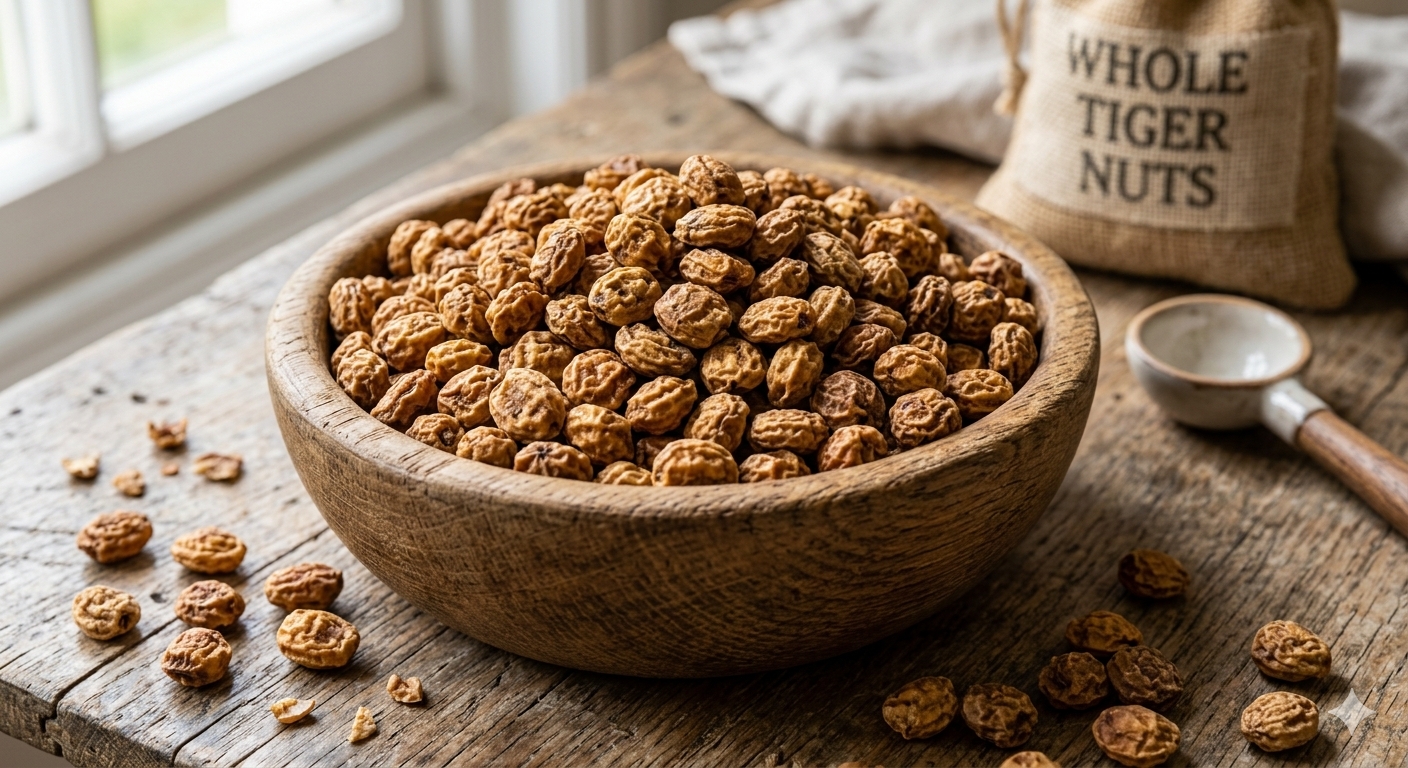
When you chew one, you are still getting the fibrous part of the tuber. That fibre slows things down.
Now soak the same tuber, blend it and strain it.
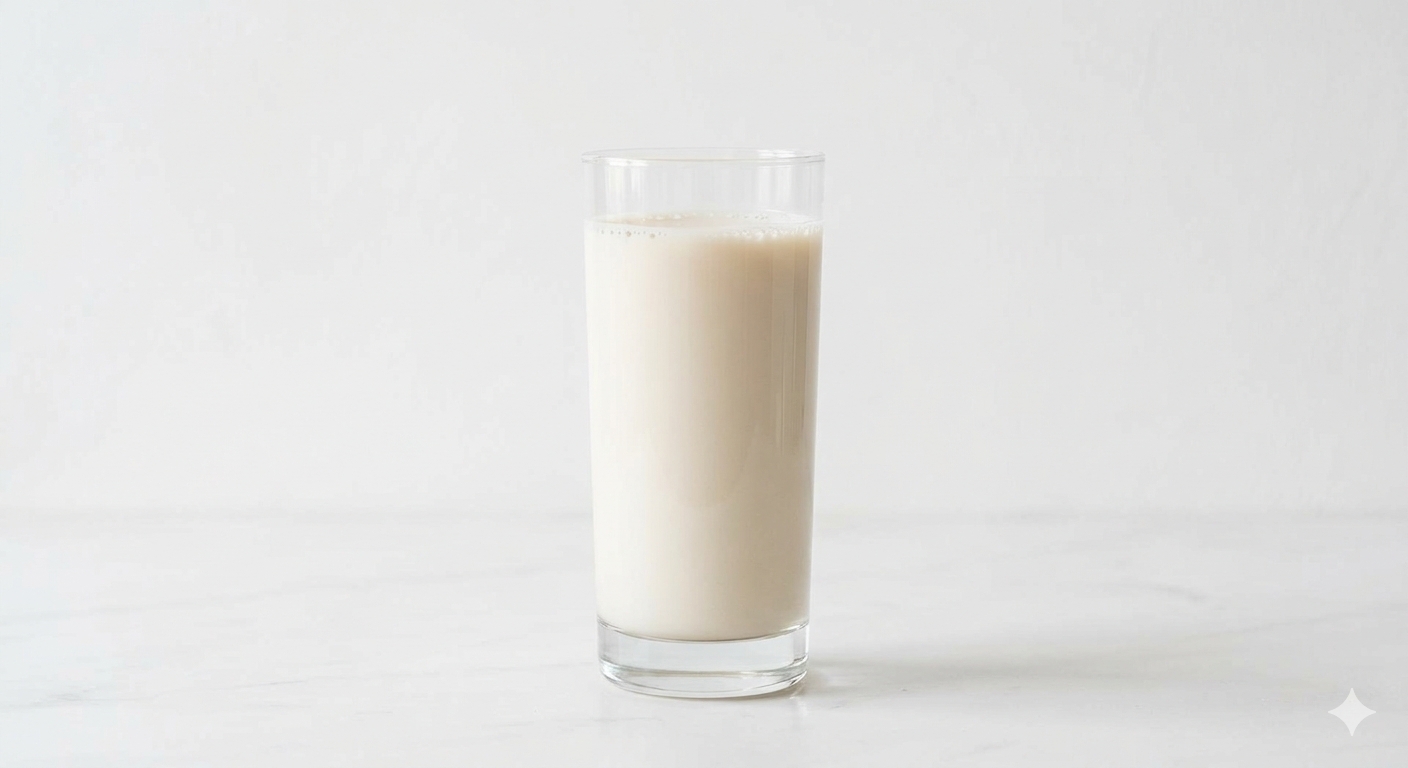
The rough fibrous part gets trapped in the sieve. What makes it into your cup is the liquid, including much of the natural sugar that was loosened during the process.
So yes, it is still natural.
But natural does not automatically mean it has no effect on your blood sugar.
##Is tiger nut milk as gentle as the whole nut?
No. And the app treats them as two different foods for exactly this reason.
About 20 whole tiger nuts, roughly 30 grams, is a food you can eat regularly because you are still getting the fibre that comes with the whole tuber.
One cup of the milk, almost full (200ml), with nothing added, is closer to twice a week because much of that fibre is removed during straining.
Same tuber.
Different form.
And the milk is the one that behaves more like a drink than a snack.
Does tiger nut reduce blood sugar?
This is where most of the marketing around tiger nut starts, so it is worth giving you the honest answer instead of simply saying yes or no.
A tiger nut and date blend brought fasting blood glucose down by more than half in diabetic rats. That is a real and interesting result.
But a rat in a laboratory is not the same thing as a person drinking kunu aya at breakfast and checking their blood sugar afterwards.
The study used diabetic rats and a particular blend. It does not prove that a cup of kunu aya bought from a roadside seller will lower your blood sugar.
What the tuber does contain is fibre that your gut cannot fully break down, along with resistant starch that can feed beneficial gut bacteria.
That fibre can help slow how quickly carbohydrates are digested and absorbed.
But that is a mechanism, not a promise that tiger nut will lower your blood sugar.
And once you turn the tuber into milk and strain it, you lose much of the fibre that helped give the whole food its advantage.
So keep the distinction clear.
The whole tiger nut has earned its reputation for being a fibre-rich food.
The milk does not automatically inherit all of those benefits just because it came from the same tuber.
Does tiger nut milk raise or lower blood pressure?
People search for both answers, but the research has not settled this enough for me to tell you that kunu aya will raise or lower your blood pressure.
That is a question to discuss with your doctor, especially if you already have blood pressure issues.
A drink having a good reputation does not make it a treatment.
What this means for your morning kunu aya
None of this means you should be scared of kunu aya.
It simply means you need to pay attention to the amount, just like you do with everything else you eat and drink.
One cup, almost full (200ml), drunk with food, with no added sugar or condensed milk, can fit into your week alongside your other starches and drinks.
If you like it sweet, blend one date into it instead of sugar, and keep kunu made that way to about 1 time a month. Or blend in half of one medium banana instead, about 2 times a week.
But a large cup at breakfast, another one in the afternoon heat, and another one sent over by a relative in the evening is a different story.
You may not have added any sugar yourself, but you are still taking in the natural sugar from the tiger nut three times.
The whole tuber, on the other hand, is one of the foods you can eat more freely because you are keeping the fibre that comes with it.
Cleveland Clinic also points to the fibre as one of the reasons tiger nuts are worth eating on their own, rather than always turning them into a drink.
Roasted, boiled soft, or straight from the packet, the whole food keeps its fibre.
The size and the count are not guesswork
Food can behave very differently when you change its form.
Tiger nut is a good example.
Boiled yam and pounded yam may come from the same tuber, but you cannot treat them as exactly the same food.
The same goes for ripe and unripe plantain.
Or soaked garri and the eba made from that same garri.
Or groundnut and the oil extracted from it.
Or whole fruit and fruit juice.
When you change the food, you can change how much of the original fibre and structure is left behind.
And that matters.
Kunu aya is also rarely consumed by itself.
A cup might come with bread, akara, or a plate of rice. Each one brings its own carbohydrates and portion size before they even meet on your breakfast table.
The calabash does not tell you any of this.
And that is where people often get into trouble. They look at one food in isolation and forget what else they are eating with it.
GluFloat already knows the difference between the tuber in your hand and the milk in your cup, along with the size and the count for both, and for whatever else is sitting beside them this week. Search it before your next cup, and it tells you straight away. It is free to start, and it does not ask for a card.
You were not wrong to reach for kunu aya instead of a soft drink.
You just needed to know how much you were actually drinking.
That small detail can be the difference between a decent choice and one that quietly adds more sugar to your day than you realised.
Thank you for reading.
Check your food before you eat it.
Search from 1,500+ Nigerian foods and meals to instantly see whether it's green, yellow, or red for your diabetes and discover simple changes that can turn it into a better choice.
Start my 7-day free trialFree for 7 days. No card required.
Read next
- Is Fufu Good for Diabetes? Cassava, Wheat and Plantain FufuIs fufu good for diabetes? Fufu scored 97, the highest swallow measured in Nigeria. See the safe size, the best soup, and how wheat and plantain fufu compare.8 min read
- Is Garri Good for Diabetes? Eba, Soaked Garri, Ijebu and Yellow GarriIs garri good for diabetes? See how eba and soaked garri differ, whether ijebu or yellow garri is safer, and the best way to take garri with diabetes.6 min read
- Is Ofada Rice Good for Diabetes?Is ofada rice good for diabetes? Yes, and it beats white rice. But the number everybody quotes for it was never tested on a Nigerian.5 min read